
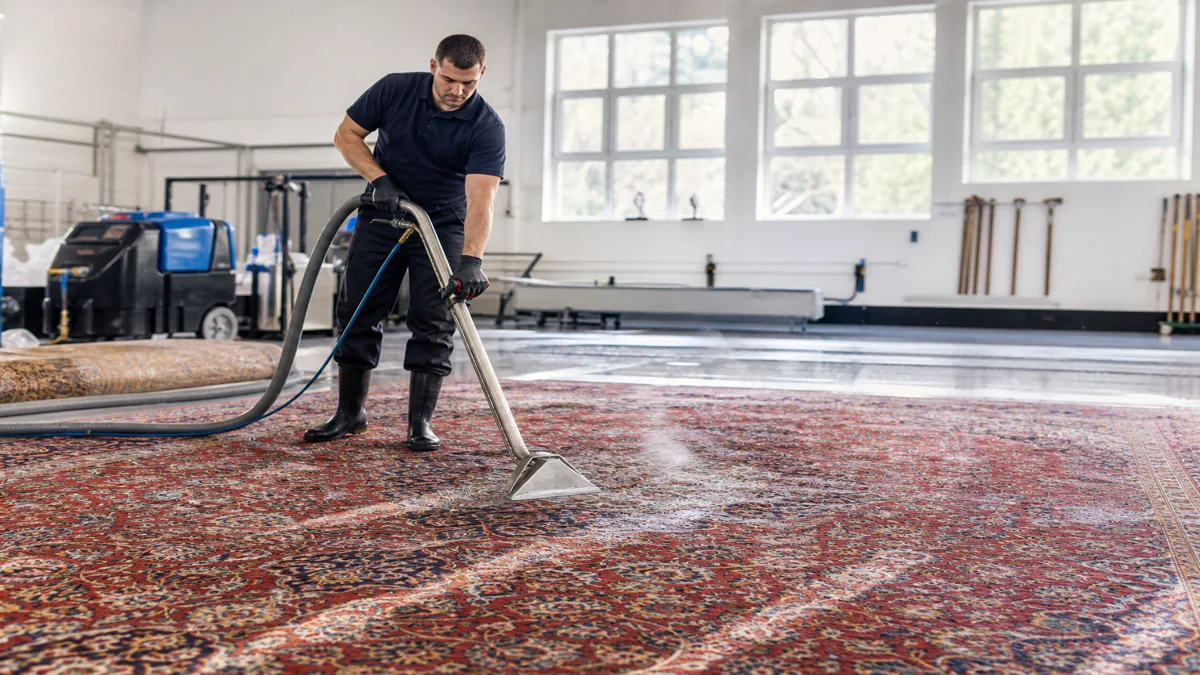
Hot water extraction is one of the most effective ways to deep-clean the right kind of rug — but it is also one of the most misunderstood. Homeowners hear "steam cleaning," picture a magic wand that erases every stain, and assume it is safe for every rug in the house. The truth is more nuanced. Hot water extraction is excellent for some rugs and genuinely risky for others.
After more than 32 years cleaning rugs across Chicagoland, we have learned exactly where hot water extraction shines and where it should never be used. This guide explains what the method really is, how we perform it, and why we route wool, silk, and antique Oriental rugs to a completely different process.
What Hot Water Extraction Actually Is
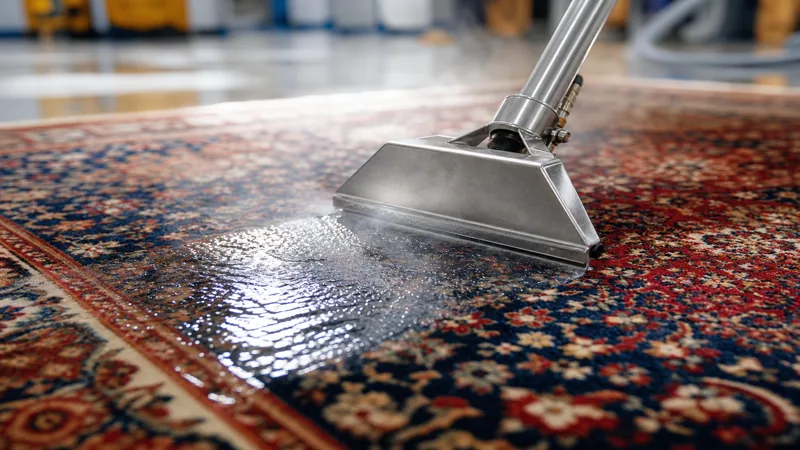
Hot water extraction (HWE) is a cleaning method where heated water combined with a cleaning solution is injected deep into the rug's fibers under pressure, then immediately vacuumed back out. That extraction step is the whole point: the same pass that flushes soil loose also pulls the dirty water — along with dissolved grime, allergens, and residue — back out of the pile.
You will often hear it called "steam cleaning", but that name is slightly misleading. Real steam is vaporized water; hot water extraction uses hot — not boiling — liquid water. The distinction matters because controlled heat and controlled moisture are what make the method safe and effective. Too much of either can damage sensitive fibers, which is exactly why fiber testing comes first.
How We Perform Hot Water Extraction, Step by Step
A good result has very little to do with the machine and everything to do with the process around it — the same discipline that guides our full rug cleaning process. Here is how we approach every rug that is a candidate for hot water extraction.
1. Inspection and Fiber Testing
Before any water touches the rug, we identify the fiber, check the dyes for colorfastness, and look for pre-existing damage, pet contamination, or weak areas. This single step decides whether hot water extraction is appropriate at all.
2. Thorough Dry Vacuuming
Most of the soil in a rug is dry, gritty particulate buried in the pile. We remove it first with dedicated dry vacuuming. Skipping this turns loose dirt into mud the moment water is introduced.
3. Pre-Treatment and Dwell Time
We apply a cleaning solution matched to the fiber and the soil type, then let it dwell so it can break down oils, traffic grime, and spots before extraction — not during it.
4. The Controlled Extraction Pass
Hot water and solution are worked through the fibers and immediately extracted. We control temperature, pressure, and how much moisture stays behind so the rug is cleaned deeply without being over-saturated.
5. Edge, Fringe, and Detail Work
Borders, fringes, and heavily used pathways get hand attention that a machine pass alone cannot deliver.
6. Controlled Drying
Finally, we dry the rug in a controlled environment with proper airflow. Fast, even drying is what prevents mildew, musty odor, and browning — the problems that plague rugs left damp on a living-room floor.
When Hot Water Extraction Is the Right Choice
Hot water extraction is a great fit when the fibers can handle controlled heat and moisture and dry quickly. That typically means:
- Synthetic rugs: polypropylene (olefin), nylon, and polyester stand up well to hot water extraction.
- Low-pile and machine-made rugs: less pile means faster, more even drying.
- High-traffic surface refreshes: when the goal is lifting embedded soil and allergens from a durable rug.
- Wall-to-wall and synthetic broadloom: the classic use case the method was designed for.
For these rugs, our professional carpet cleaning approach removes deep soil and allergens efficiently while keeping drying times short — usually a matter of hours rather than days.
When We Switch to Full-Immersion Hand Washing Instead
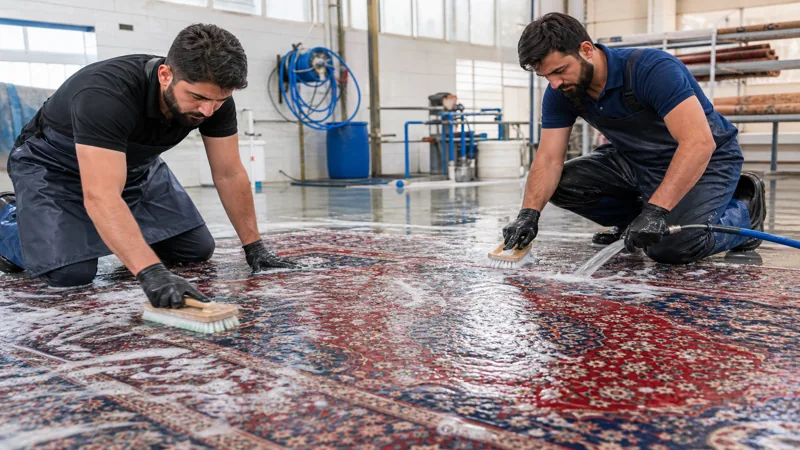
Here is where honesty matters more than a sales pitch. For fine and delicate rugs, we do not use surface hot water extraction. Instead, we clean them with a controlled, full-immersion hand-washing process in our facility. This applies to:
- Wool rugs, which can shrink or felt if over-wetted or over-agitated.
- Silk rugs, which are delicate and prone to texture and luster changes.
- Natural-dye and vegetable-dye rugs, which can bleed if handled incorrectly.
- Antique and hand-knotted Oriental rugs, where the value and construction may also call for professional repair and restoration.
These heirloom pieces deserve immersion cleaning that flushes soil completely out of the foundation rather than just off the surface. Because wool is also vulnerable to pests, we pair delicate washing with moth treatment whenever an infestation is a risk.
What Makes Our Approach Different
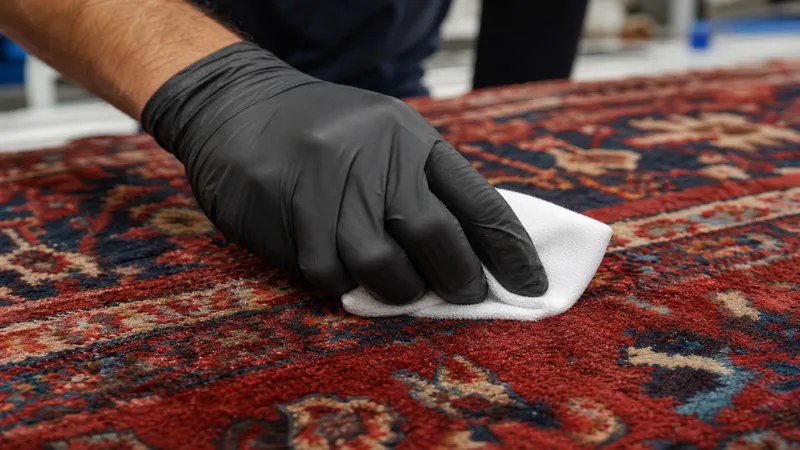
Whether a rug goes through hot water extraction or full immersion, the difference is in the decisions we make before and after cleaning:
- We test first. Fiber and dye testing determines the method — not the other way around.
- We never over-wet. Controlled moisture protects the foundation and prevents dye migration.
- We control the dry-down. Dedicated drying with airflow prevents mildew, odor, and browning.
- We clean off-site. Free pickup and delivery means your rug is cleaned in a controlled facility, not on a damp floor.
If your rug has pet accidents in it, extraction alone often is not enough. Because urine penetrates the foundation, our dedicated pet odor and urine removal targets the source rather than just the surface.
Keeping Your Rug Cleaner, Longer
After a professional clean, a few habits go a long way: vacuum regularly, rotate the rug to even out wear, and blot spills immediately. Adding a fabric protector helps resist future spills between cleanings, and a quality pad underneath reduces wear over time.
Frequently Asked Questions
Is hot water extraction the same as steam cleaning?
The terms are often used interchangeably, but they are not identical. Hot water extraction injects heated water and cleaning solution into the fibers and immediately vacuums it back out. True steam cleaning uses vaporized water. Most services advertised as "steam cleaning" are actually performing hot water extraction.
Is hot water extraction safe for wool or silk Oriental rugs?
For most fine wool, silk, natural-dye, and antique handmade rugs we do not use surface hot water extraction. These rugs can bleed dye, brown, or shrink if over-wetted. Instead we clean them with a controlled full-immersion hand-washing process in our facility.
How long does a rug take to dry after hot water extraction?
With proper extraction and airflow, most synthetic and low-pile rugs dry within 6 to 12 hours. Because we control moisture and use dedicated drying with air movers, we avoid the over-wetting that leads to mildew, odor, or browning.
How do you decide between hot water extraction and hand washing?
We inspect the rug and test the fibers and dyes first. Synthetic, machine-made, and low-pile rugs are usually great candidates for hot water extraction. Wool, silk, hand-knotted, and antique rugs are routed to full-immersion hand washing for the safest, deepest clean.
Do you offer free pickup and delivery in Chicagoland?
Yes. We provide free pickup and delivery throughout the Chicago area so your rug is cleaned in our controlled facility rather than on-site, where drying and moisture cannot be managed as carefully.