
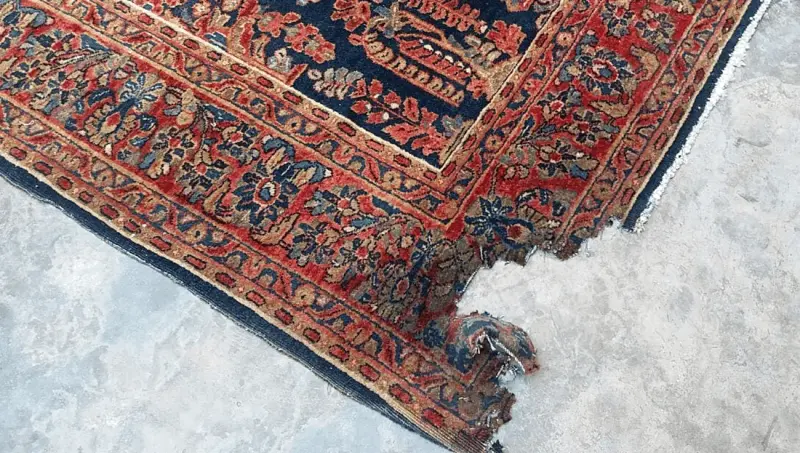
Professional Moth Treatment for Wool Rugs
Protect your valuable wool and silk Oriental rugs from destructive moth infestations. Our specialized treatment eliminates moth larvae and creates a protective barrier against future damage.
Why Moths Target Oriental Rugs
Clothes moths and carpet beetles are attracted to the keratin protein found in wool fibers—the same material in your Oriental rug. These pests lay eggs in dark, undisturbed areas of your rug, and their larvae feast on the wool until they pupate.
The damage is often hidden until it's severe. Moths prefer the backside of rugs and areas under furniture where they're undisturbed. By the time you notice bare spots or loose fibers on top, significant damage may have already occurred underneath.
Signs of Moth Infestation
Our Moth Treatment Process
Thorough Inspection
We examine both sides of your rug under magnification to assess the extent of infestation and identify all affected areas.
Deep Cleaning & Larva Removal
Complete immersion washing removes all moth eggs, larvae, and debris from deep within the rug fibers and foundation.
Sanitization Treatment
Specialized treatment kills any remaining eggs or larvae that survived cleaning, ensuring complete elimination.
Protective Barrier Application
We apply a wool fiber protector that repels moths and prevents future infestations. Safe, odorless, and long-lasting.
Moth Damage Repair
If your rug has existing moth damage, our repair specialists can reweave damaged areas and restore your rug's appearance. We recommend treating and repairing together for complete restoration.
Prevention Tips
Complete Rug Protection
Moth treatment works best as part of comprehensive rug care. Regular professional cleaning, stain protection, and proper padding all contribute to protecting your valuable investment.
🚨 Moth Emergency?
Don't wait—moth damage spreads quickly. Call immediately for inspection.
(224) 551-0711Send photos for quick assessment
Related Services
💡 Storage Tip
Never store wool rugs in plastic. We wrap rugs in breathable Tyvek paper that protects against moths while allowing air circulation.
Moths can destroy a rug in weeks. If you see small holes, loose fibers, or tiny larvae in your wool rug, act immediately.
Serving the Greater Chicagoland Area
We provide free pickup and delivery for moth treatment throughout Chicago and surrounding suburbs.
What Our Customers Say
Rated 5.0/5 across 9 Google reviews. Real feedback from real customers.
"We had a rug that was not cleaned for many years. After the cleaning my rug looked like new. I will definitely recommend this company to others. Excellent service guys."
Saulius Judickas
Google Review
"We had 9 rugs cleaned by this company. They offered free pickup and delivery. They delivered the rugs early on the promised day even though it was weekend. The jobs was done excellent, the colors now are so much brighter. I would highly recommend them and will use them again in the future."
Aleksandr Menaker
Google Review
Moth Treatment FAQ
Common questions about moth infestations, treatment, and protecting your wool rugs.
How do I know if my rug has moth damage?
Look for these warning signs of moth infestation in your Oriental rug:
- Bare patches or thin spots where wool fibers have been eaten away
- Loose fibers or pile falling out when you run your hand across the rug
- Silky webbing or cocoons on the rug surface or underside
- Sandy, gritty debris (larval waste called frass) under or around the rug
- Small, cream-colored larvae (about 1/4 inch long) crawling on the rug
Moth damage often starts on the underside of the rug or beneath furniture where it's dark and undisturbed. We recommend flipping your rug and inspecting it every few months. Read our moth prevention tips for more guidance.
Can moth damage on a rug be repaired?
Yes, in most cases moth damage can be repaired by skilled craftsmen. Our rug repair specialists can reweave eaten areas, rebuild pile, and restore the rug's appearance. The extent of repair depends on how much damage has occurred—small areas are relatively straightforward, while large sections require more involved restoration.
We strongly recommend treating the infestation first, then repairing the damage. This ensures no active larvae remain that could destroy the repair work. Our combined treatment-and-repair approach saves time and protects your investment.
Early detection is key. The longer moths go untreated, the more costly the repairs become. If you suspect moth activity, contact us immediately for a free inspection.
What attracts moths to Oriental rugs specifically?
Clothes moths (Tineola bisselliella) are specifically attracted to keratin, a protein found in natural animal fibers like wool, silk, and cashmere—the very materials that make up most Oriental rugs.
Moths prefer areas that are dark, undisturbed, and slightly humid. Rugs stored in closets, placed under heavy furniture, or kept in rarely used rooms are particularly vulnerable. Soiled rugs are even more attractive because food spills and body oils provide additional nutrients for larvae.
Regular professional cleaning removes the soil and organic matter that attract moths, making it one of the best preventive measures you can take.
How do you prevent moths from coming back after treatment?
Our treatment includes a protective barrier application that repels moths and prevents re-infestation. This safe, odorless treatment bonds to the wool fibers and provides long-lasting protection.
To maintain protection, we recommend:
- Vacuum regularly, especially under furniture and along rug edges
- Rotate your rug periodically to expose all areas to light and foot traffic
- Schedule annual professional cleaning to remove moth-attracting soil
- Use cedar blocks or lavender sachets as natural deterrents near stored rugs
- Never store wool rugs in sealed plastic—use breathable wrapping materials instead
For rugs in storage, we offer professional wrapping in breathable Tyvek paper that protects against moths while allowing air circulation.
Should I store my wool rug in plastic to protect it from moths?
No—never store wool rugs in sealed plastic. While it might seem logical, plastic traps moisture and creates the warm, humid environment that moths love. Trapped moisture can also cause mold, mildew, and permanent odors in your rug.
Instead, have your rug professionally cleaned before storage to remove any eggs or larvae. Then wrap it in breathable materials like acid-free paper, cotton sheeting, or Tyvek paper.
Store the wrapped rug in a cool, dry, well-ventilated area. Avoid attics (too hot), basements (too damp), and garages (temperature fluctuations). If you need storage assistance, contact us about our professional rug wrapping service.
How quickly can moths destroy an Oriental rug?
Moth larvae can cause significant damage in just a few weeks. A single female moth can lay 50–100 eggs, and larvae feed continuously on wool fibers for 2–3 months before pupating. In warm conditions, this cycle accelerates dramatically.
Because moths prefer the underside of rugs and areas beneath furniture, extensive damage can occur before you notice any visible signs on the rug's face. By the time bare patches appear on top, the backside may already have substantial fiber loss.
This is why we urge rug owners to act immediately at the first sign of moth activity. Call (224) 551-0711 or send us photos for a quick assessment. Early treatment can save thousands in repair costs.
Don't Let Moths Destroy Your Treasured Rug
Schedule an inspection today. Early treatment prevents costly damage and repairs.