
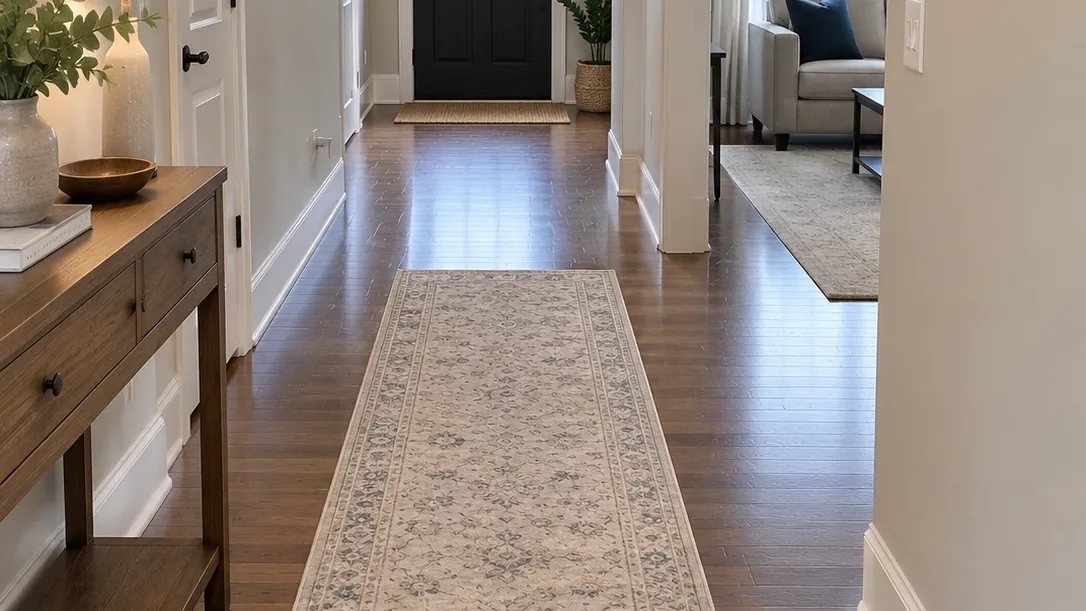
Most rug-cleaning articles give you vague ranges and generic advice. This one is different. We walk through a real job from start to finish: a 2.5 × 10 ft wool hallway runner we picked up from a home in Glencoe, cleaned at our Glenview facility, and returned. You will see what we checked, what we did, and exactly what the homeowner paid.
If you are searching for rug cleaning in Glencoe or anywhere on the North Shore, or you are wondering whether your own runner is worth cleaning professionally, this case study shows what to expect.
Key Takeaways
- The job: a 2.5 × 10 ft (25 sq ft) wool runner from Glencoe, IL, completed September 27, 2026.
- The price: $180 total, which works out to $7.20 per square foot, with free pickup and delivery included.
- The method: inspection, dusting, full-immersion hand washing, and controlled flat drying at our facility, not on the homeowner's floor.
- Typical runner pricing: $3–$8 per square foot, depending on fiber, construction, and condition.
- How often: hallway runners are high-traffic rugs and usually need professional cleaning every 12–18 months.
The Job at a Glance
| Detail | This job |
|---|---|
| Location | Glencoe, IL 60022 |
| Rug | Wool hallway runner |
| Size | 2.5 × 10 ft (25 sq ft) |
| Service | Professional runner cleaning with free pickup and delivery |
| Where it was cleaned | Our facility in Glenview, IL |
| Completed | September 27, 2026 |
| Total price | $180 ($7.20 per sq ft) |
The homeowner wanted what most runner owners want: a hallway rug that looks and feels clean again, without hauling it anywhere or risking damage to the hardwood underneath. We scheduled a pickup, rolled the runner at the home, and brought it back to our facility.
Why Hallway Runners Get Dirty Faster Than Any Other Rug
A runner sits in the one spot every person in the house walks across, usually several times a day. Hallway and entry runners collect soil differently from living-room rugs because the traffic is concentrated into a narrow lane only a few feet wide.
- Grit from shoes works down into the pile. Under foot pressure it acts like sandpaper on the fibers.
- Oils from bare feet and socks attract new dirt, which is why a center lane often looks darker than the borders.
- Chicago winters add road salt and slush near the front door. Salt residue stiffens wool and dulls color if it stays in the rug.
- Runners creep and bunch on hardwood, so the same folds take the wear again and again.
Wool handles all of this better than most fibers. Wool's natural structure includes a protective outer layer that resists stains and fibers that spring back after being crushed. That resilience is also why a dirty wool runner often looks surprisingly good again after a proper wash: the fiber is fine, it just needs the soil removed.
Our Assessment Before Any Water Touched the Rug
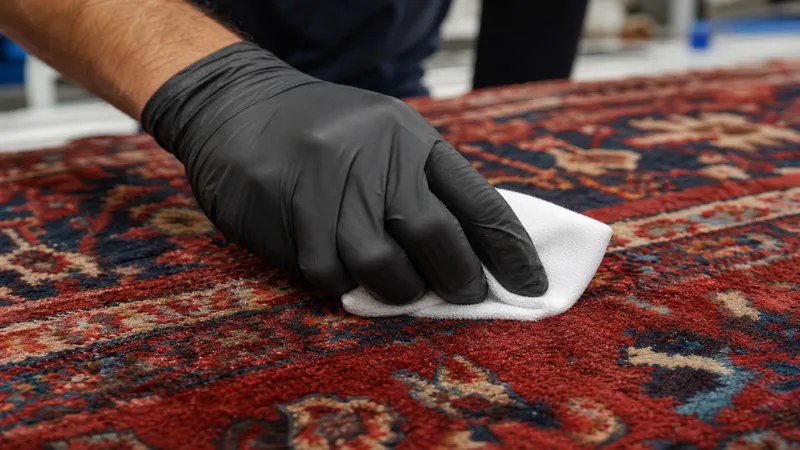
Every rug we clean starts with an inspection, and runners are no exception. Before washing this one, our team checked:
- Fiber content: confirming it was wool, which determines the cleaning solution, water temperature, and drying plan.
- Dye stability: a spot test to make sure colors would not bleed during washing. Dark reds and blues in borders are the usual suspects.
- Construction and edges: the condition of the binding, the ends, and the foundation. Anything loose gets noted before the wash so it does not get worse.
- Spots and odors: anything that needs a pre-treatment rather than the standard wash.
This step also decides the price. A quote over the phone or from a photo gets you close, but the inspection is where we confirm the fiber, the size, and whether anything extra is needed.
How We Cleaned This Wool Runner, Step by Step
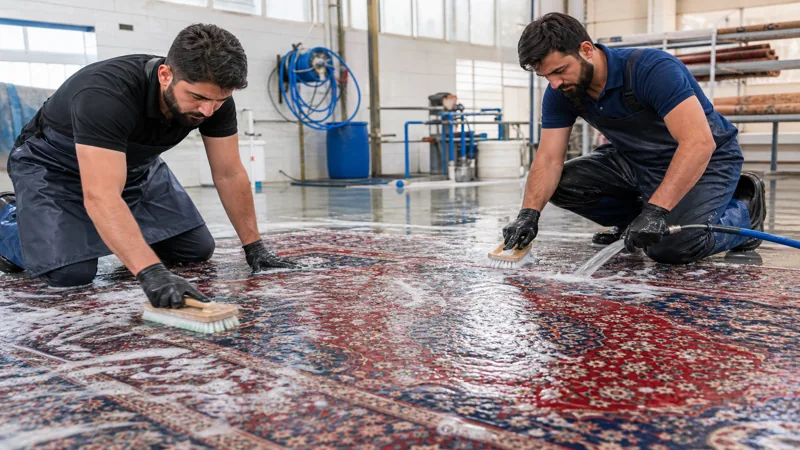
Once the rug passed inspection, it went through the same six-step cleaning process we use for Persian and Oriental rugs:
- Dust removal. We removed dry soil first. Runners hold a surprising amount of grit deep in the pile, and washing it without dusting first just turns that grit into mud.
- Full-immersion washing. The runner was washed by hand with a wool-safe, pH-balanced solution. Immersion lets water flush through the entire rug, including the foundation where soil settles.
- Thorough rinsing. Soap left in a rug attracts dirt, so rinsing matters as much as washing.
- Centrifuge pre-dry. Spinning removes most of the water quickly, which shortens drying time and protects the dyes.
- Controlled flat drying. The runner dried flat with monitored airflow until it was completely dry through the foundation.
- Final inspection and grooming. We groomed the pile, checked the edges and ends, and rolled the runner for delivery.
That is what separates professional wool rug cleaning from a surface refresh: the rug is cleaned all the way through, then dried under conditions we control.
Why We Took It to the Facility Instead of Cleaning It on the Floor
A runner is small enough that people often assume it can be cleaned where it lies. For a wool runner on hardwood, that is the riskiest option.
Portable machines and hot water extraction work well on wall-to-wall carpet, but on a runner sitting on a hardwood hallway they cannot rinse the foundation completely, and whatever water goes in has nowhere to go but the floor. Wet wool on hardwood can leave the rug musty and the floor finish damaged. Taking the rug to our facility lets us wash it fully and dry it properly, with no moisture risk to the home.
For the homeowner, the only visible part of the job was a short pickup visit and a delivery. Everything else happened at our facility.
Not every runner needs the trip, though. Machine-made synthetic runners clean well right where they lie, as in our in-home rug cleaning job in Chicago.
From Our Side: What We Wish Every Runner Owner Knew
After more than 32 years of cleaning rugs across Chicago and the North Shore, a few things come up with runners again and again:
- Runners get less attention than they deserve. People clean the big living-room rug and forget the runner, even though the runner gets far more foot traffic.
- Rotate it, and don't wait until it looks worn. Turning a runner end to end every few months helps it wear evenly. Waiting until the center lane is visibly gray means the grit has already been grinding the fibers for a long time.
- Carpet shampoos are not rug shampoos. Many store-bought cleaners are too alkaline for wool and leave a sticky residue that makes the rug re-soil faster.
- Drying is where DIY jobs fail. A runner that stays damp for a day or two on a hallway floor is a mildew and odor problem waiting to happen.
As an IICRC Certified Firm, we follow the best practices set out in the ANSI/IICRC S100 standard for professional cleaning of textile floor coverings. That means inspection before cleaning, cleaning matched to the fiber, and never returning a rug that is not fully dry.
What Does Runner Rug Cleaning Cost?
Here is the math on this job: 25 sq ft × $7.20 = $180, with free pickup and delivery included. Most professional rug cleaners price by the square foot, and our standard range is $3–$8 per square foot. Here is what that looks like for common runner sizes:
| Runner size | Square feet | Typical price range |
|---|---|---|
| 2.5 × 8 ft | 20 sq ft | $60–$160 |
| 2.5 × 10 ft (this job) | 25 sq ft | $75–$200 (this job: $180) |
| 2.5 × 12 ft | 30 sq ft | $90–$240 |
| 3 × 14 ft | 42 sq ft | $126–$336 |
Ranges are for cleaning only. Your exact price is confirmed after inspection.
What moves the price up or down
- Fiber: wool and silk need hand washing and longer, controlled drying, so they price higher than synthetics.
- Construction: hand-knotted runners take more care than machine-made ones.
- Condition: heavy soil, pet urine, or set-in stains need extra treatment time.
- Add-ons: fiber-safe stain protection after cleaning, pet odor treatment, or edge and fringe repair are quoted separately.
How to save on runner cleaning
- Drop it off yourself: bring your rug to our Glenview facility and save $30 on invoices of $100 or more.
- Clean on schedule: a runner cleaned every 12–18 months needs less work, and costs less to maintain, than one that has gone five years.
- Protect it between cleanings: the care habits below reduce wear and make each cleaning easier.
Keeping a Runner Clean Between Professional Cleanings
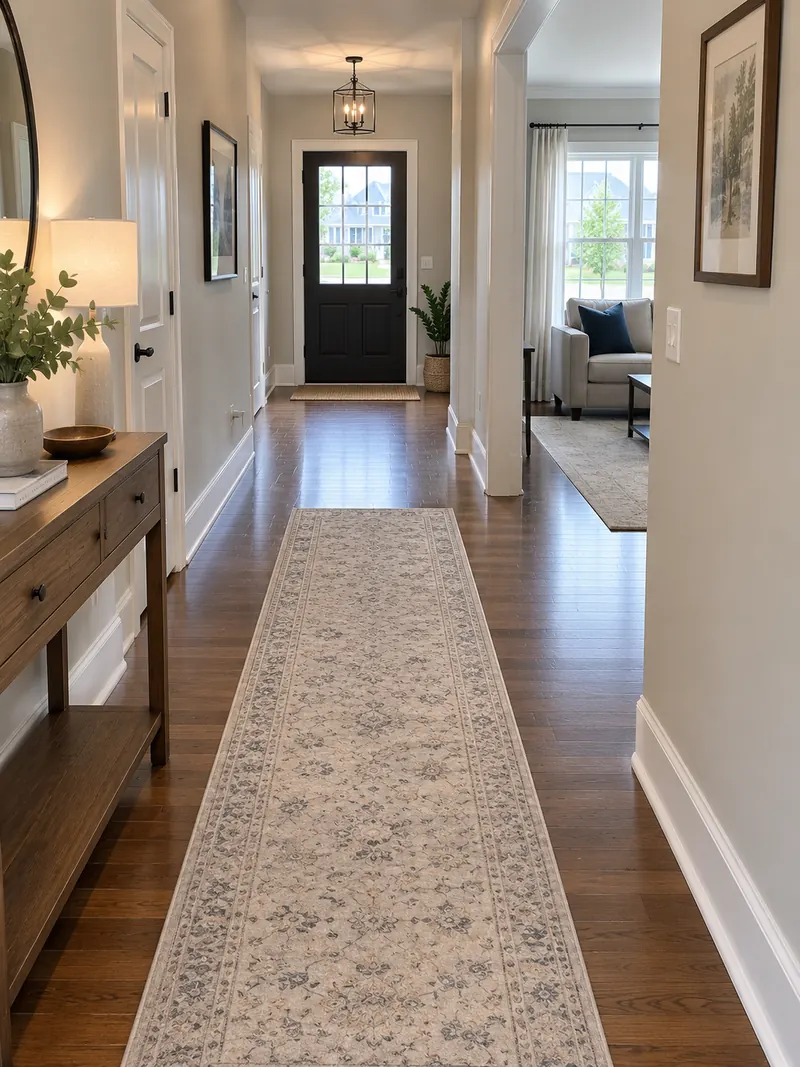
A clean runner stays clean longer with a few simple habits:
- Vacuum weekly, both sides when you can. A HEPA-filter vacuum also helps with allergens. The American Lung Association recommends weekly HEPA vacuuming for homes managing dust mites.
- Put a non-slip pad underneath. A properly sized non-slip rug pad stops the runner from creeping and bunching, protects the hardwood finish, and spreads out foot pressure so the pile wears evenly.
- Add a doormat at the entry. Most grit comes in on shoes. Catching it at the door keeps it out of the runner.
- Blot spills immediately. Blot with a white cloth and cool water. Never scrub, and skip the carpet shampoo.
- Rotate it every few months. Turning the runner end to end evens out wear and sun exposure.
Frequently Asked Questions
How much does it cost to clean a runner rug?
Runner cleaning is usually priced at $3–$8 per square foot depending on fiber, construction, and condition. A standard 2.5 × 10 ft runner generally runs $75–$200. The wool runner in this Glencoe case study was $180, with free pickup and delivery included.
How long does professional runner cleaning take?
Most runners are back in your home within 5–7 business days of pickup. That covers inspection, dusting, washing, a centrifuge pre-dry, controlled drying, and a final inspection.
Can I clean a wool runner rug at home?
Vacuuming and prompt spot cleaning, yes. A deep wash, no: soaking a wool runner on a hardwood floor leaves soap and soil in the foundation, dries slowly, and can damage the floor. A full rinse and controlled drying are what professional cleaning adds.
How often should a hallway runner be professionally cleaned?
Hallway and entry runners are high-traffic rugs and usually need professional cleaning every 12–18 months, or every 6–12 months with pets or kids. Our guide on how often to clean high-traffic rugs breaks it down by room.
Do you offer rug pickup and delivery in Glencoe, IL?
Yes. Pickup and delivery are free in Glencoe and throughout the North Shore. You can also drop your rug off at 2003 Johns Dr. in Glenview and save $30 on invoices of $100 or more. Call (224) 551-0711 to schedule.